
August 3, 2026
9 Things to Know Before Laser Tattoo Removal
If you have a tattoo you no longer want, tattoo laser removal can gradually fade the pigment over a series of treatments. However, it isn’t a one-session process, and the results, treatment experience and number of appointments can vary considerably from one tattoo to another.
Factors such as the age, size, colour, depth, and location of your tattoo can all affect how it responds. Your skin, medical history and the way you heal also need to be considered before treatment begins.
At Elley Medispa in Welwyn Garden City, we believe it’s important to understand the process before committing to a course. From how many laser tattoo removal sessions you might need to aftercare, costs, and realistic results, here are nine things worth knowing before your first appointment.
1. Laser Breaks Down Tattoo Pigment Gradually
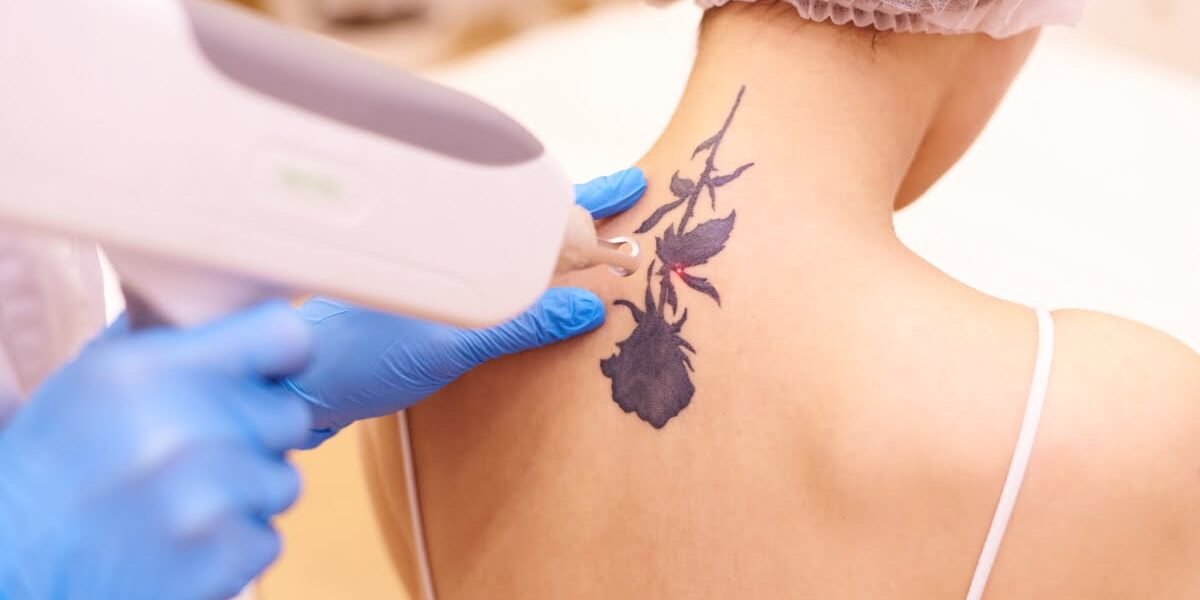
Laser tattoo removal works by targeting the pigment within your tattoo.
If you’ve been wondering how laser tattoo removal works, the basic principle is that high-intensity laser light is directed at the tattoo pigment, breaking it down into smaller particles. The tattoo then gradually becomes lighter over time. NHS information about laser tattoo treatment similarly describes lasers as breaking up tattoo pigment rather than physically removing the tattoo from the skin.
Different ink colours respond to different wavelengths of laser light, which means the equipment used and the colours within your tattoo both matter.
At Elley Medispa, the tattoo itself is assessed before a treatment plan is recommended. Factors such as its size, age, colour and pigment depth can all influence the approach.
2. One Session Is Rarely Enough
Laser tattoo removal should be viewed as a course rather than a one-off treatment.
There isn’t a universal answer to how many laser tattoo removal sessions you will need. Tattoos vary widely, and even two tattoos that look similar on the surface may respond differently. Your treatment course may be influenced by:
- The size of the tattoo.
- How old it is.
- The colours used.
- How deeply the ink was placed.
- Whether it was professional or amateur.
- The density of the pigment.
- The area of the body being treated.
- Your individual skin and healing response.
Elley Medispa advises that several treatments are generally required, and that the number needed depends on factors such as tattoo age, size, colour, skin colour, and pigment depth.
Rather than focusing too heavily on a specific number before your consultation, it is more useful to think about how your tattoo responds from one appointment to the next.
3. Ink Colour, Depth and Tattoo Age Affect the Response
Not every part of a tattoo responds in exactly the same way.
Black pigment generally absorbs a broad range of laser wavelengths and is therefore more straightforward to target, whereas coloured inks may require specific wavelengths. Elley Medispa notes that different colours may require specific lasers depending on the pigment being treated.
The depth and density of the ink can also make a difference. A heavily saturated professional tattoo may behave differently from a lighter or older design.
Tattoo age matters too. Tattoos naturally change over time, so an older tattoo may respond differently from one that has been recently applied.
This is one reason why laser tattoo removal before-and-after photographs should always be viewed in context. Another person’s results cannot tell you exactly how quickly your own tattoo will fade.
4. Complete Removal Cannot Be Guaranteed
A responsible practitioner should talk about fading and individual results rather than promising complete clearance.
Some tattoos may fade substantially, while others may leave residual pigment behind. Colours within the same tattoo can also respond at different rates.
Skin changes are another possibility. NHS laser treatment information notes that tattoo treatment can occasionally cause areas of skin to become lighter or darker, and that these pigment changes can take a long time to resolve. Scarring is also a potential risk, although the likelihood varies according to the individual and treatment circumstances.
For that reason, be cautious about any provider promising that your tattoo will disappear completely within a set number of treatments.
A more realistic approach is to assess progress throughout your course and adjust expectations based on how your tattoo responds.
5. Treatment Can Be Uncomfortable
Laser tattoo removal can cause discomfort, although the experience varies by person and treatment area.
Some areas of the body are naturally more sensitive than others, and larger or more densely pigmented tattoos can require more laser pulses during an appointment.
It’s therefore better to expect some degree of sensation than to choose a provider based on promises that tattoo removal is completely pain-free.
After laser treatment, temporary soreness and skin changes may occur as the area heals. NHS laser treatment guidance notes that soreness or discomfort can follow laser procedures and that treated skin may become itchy during healing.
If you’re particularly worried about discomfort, bring it up during your consultation. Your practitioner can explain what the treatment generally feels like and what comfort measures are appropriate for you.
6. Sessions Need Enough Healing Time Between Them
More frequent treatments do not automatically mean faster tattoo removal.
Your skin needs time to recover between appointments, and the tattoo also needs time to respond to treatment.
NHS laser clinic guidance indicates that tattoo removal treatments are commonly spaced at least six weeks to two months apart, although the appropriate interval will depend on your individual circumstances and the advice of your treating practitioner.
This means tattoo removal can take time, especially where several sessions are required.
Trying to rush the process by treating the same area again before it has adequately healed may increase the risk of unwanted skin reactions.
If your skin has not recovered as expected by your next appointment, let your practitioner know rather than assuming treatment should continue on the original date.
7. Preparation Can Affect Treatment Safety
What you do before your appointment matters.
Your practitioner should give you personalised pre-treatment instructions based on your skin, tattoo and medical history.
Sun exposure is particularly important to consider. NHS information notes that side effects from laser tattoo treatment can be more common when the skin is tanned.
Before treatment, you may be advised to:
- Avoid tanning and excessive sun exposure.
- Avoid fake tan over the treatment area.
- Tell your practitioner about the medications you take.
- Discuss any recent changes to your health.
- Avoid treatment if the skin is irritated, injured or infected.
- Follow any skincare instructions provided by your practitioner.
- Attend a consultation and any requested pre-treatment assessment.
Do not stop prescribed medication simply because you are planning laser treatment. Instead, tell your practitioner what you take so they can determine whether further medical advice is needed.
Your consultation is also the time to mention previous reactions, scarring problems or other concerns about the treatment area.
8. Laser Tattoo Removal Aftercare Is an Important Part of the Process
Your treatment doesn’t finish when the laser is switched off.
Good laser tattoo removal aftercare helps protect the treated skin while it heals. Your practitioner should explain exactly how to care for the area and what reactions are expected after your appointment.
Depending on your treatment, you may notice temporary redness, tenderness, swelling or changes to the surface of the skin.
The key is to avoid interfering with the healing process. Scratching or picking at a healing treatment area can increase the chance of skin damage and scarring. NHS laser clinic guidance specifically warns against scratching treated skin while it heals.
Follow the aftercare instructions you are given, which may include advice on:
- Keeping the area clean.
- Avoiding picking, scratching or removing crusts.
- Protecting the area from the sun.
- Avoiding certain products while the skin heals.
- Waiting before swimming, intense exercise or other activities.
- Knowing which symptoms should prompt you to contact your practitioner.
If you develop worsening or spreading redness, increasing pain or signs that the area may be infected, seek appropriate medical advice. Broken skin following laser treatment can carry a risk of secondary infection.
9. Choose a Trained Provider With the Right Equipment and Support
Who performs your treatment matters just as much as the laser itself.
Laser equipment can pose risks to both the skin and eyes when it isn’t used appropriately. UK Health Security Agency guidance notes that higher-powered lasers can cause eye and skin injury, reinforcing the importance of proper controls, equipment and trained operation.
Before starting tattoo laser removal, look for a provider who assesses your tattoo and suitability before treatment, explains realistic outcomes and gives you clear aftercare advice.
Questions to Ask at Your Consultation
Use your consultation to find out exactly how the clinic approaches treatment.
Useful questions include:
- What laser will you use for my tattoo?
- Is it suitable for the colours in my tattoo?
- What factors could affect my results?
- How many sessions might I realistically need?
- How far apart will my appointments be?
- What will the treatment feel like?
- What side effects and risks should I know about?
- What aftercare will I need to follow?
- What should I do if my skin doesn’t heal as expected?
- Who should I contact if I have concerns after treatment?
- What results would be realistic for my particular tattoo?
A good consultation should leave you better informed, not pressured to commit immediately.
If you’re considering laser tattoo removal in Welwyn Garden City, Elley Medispa offers consultations to assess the tattoo and discuss the treatment process before you begin.
Red Flags to Avoid
Be cautious if a provider makes the process sound too simple. Warning signs can include:
- Guaranteed complete tattoo removal.
- Promising an exact number of sessions without assessing your tattoo.
- No consultation or suitability assessment.
- No questions about your health or medication.
- Vague information about the laser being used.
- No discussion of risks or possible skin changes.
- No clear aftercare instructions.
- Pressure to purchase a treatment course immediately.
- An environment that appears unsuitable for laser treatment.
- No clear way to contact the provider if you experience a problem afterwards.
The goal shouldn’t simply be to remove your tattoo as quickly as possible. It should be approached carefully, with appropriate time for assessment, treatment, and healing.
What Does Laser Tattoo Removal Cost?
The tattoo removal laser cost depends partly on the tattoo being treated.
Tattoo size is one of the factors that can influence pricing because larger treatment areas generally require more time and laser pulses than smaller ones.
At Elley Medispa, laser tattoo removal prices are based on tattoo size, with options available for both individual appointments and treatment courses.
Remember that the price of one session isn’t necessarily the same as the overall cost of removing or fading a tattoo. The total will depend on how many treatments you ultimately need.
A consultation can therefore give you a more useful idea of both the treatment process and the likely financial commitment.
When Should Laser Tattoo Removal Be Postponed?
Sometimes the safest decision is to delay treatment.
If the skin around your tattoo is infected, inflamed, injured or hasn’t healed properly following a previous session, tell your practitioner before your appointment.
Your current medication and medical history should also be discussed during the assessment, particularly if anything has changed since your previous visit.
Pregnancy is another important consideration. Some NHS laser services advise against laser tattoo removal during pregnancy, so if you are pregnant or think you may be pregnant, tell your practitioner and seek appropriate professional advice before treatment.
You should also contact your practitioner or seek medical advice if a treated area is not healing normally, particularly if you develop symptoms such as spreading redness, increasing pain or signs of infection.
FAQs About Laser Tattoo Removal
Can Laser Tattoo Removal Cause Scarring?
Scarring is a possible risk, although it does not happen to everyone.
NHS guidance describes the risk of scarring following certain laser tattoo treatments as low, while also noting that changes in skin pigmentation can occur.
Following appropriate treatment intervals and aftercare instructions, including avoiding scratching or picking at the healing skin, is important.
Can You Have Laser Tattoo Removal While Pregnant?
Laser tattoo removal is generally best postponed during pregnancy.
Some NHS laser services specifically advise against tattoo laser treatment during pregnancy. If you become pregnant during a treatment course, tell your practitioner before your next appointment.
Can You Fade a Tattoo for a Cover-Up?
Yes, full removal isn’t always the goal.
Some people choose laser tattoo removal simply to fade a design enough for their tattoo artist to create a cover-up more effectively.
The degree of fading required will depend on your existing tattoo and the design you want to place over it, so it can be useful to discuss your plans with both your laser practitioner and tattoo artist.
Should You Avoid the Sun During Laser Tattoo Removal?
Protecting the treatment area from excessive sun exposure is important.
NHS guidance notes that side effects of laser tattoo treatment can be more common when the skin is tanned. Your practitioner should explain how long you need to avoid sun exposure before and after your appointments.
How Many Sessions Does Laser Tattoo Removal Take?
There is no fixed number that applies to every tattoo.
Your tattoo’s size, age, colour, depth, and pigment density, along with your skin type and response to treatment, can all influence the number of appointments required. Elley Medispa assesses these factors when discussing a treatment course.
Start With a Laser Tattoo Removal Consultation
The most important thing to know before tattoo laser removal is that the process is individual.
Your tattoo’s colours, age, size and depth can all affect how it responds. Several treatments are normally needed; adequate healing time must be allowed between appointments, and complete clearance cannot be guaranteed.
A consultation gives you the opportunity to have the tattoo assessed and to ask about realistic results, treatment spacing, aftercare, and costs before committing to a course.
If you’re ready to explore your options, you can arrange a free consultation with Elley Medispa in Welwyn Garden City.
You can also explore all Elley Medispa services, learn more about Elley Medispa, and contact us today!
Post Tags:


Elley Spa
We are a secret gem in the heart of Welwyn Garden City town centre – an oasis of healing, wellbeing, rebirth and transformation. A place to become calm, complete, more ‘present’ and attuned to your body and your heart and when you leave our place, you feel less stressed and anxious
Recent Post



Need Help?
We would love to hear from you! If you have a question or suggestion or want to say hello, please feel free to contact us.